
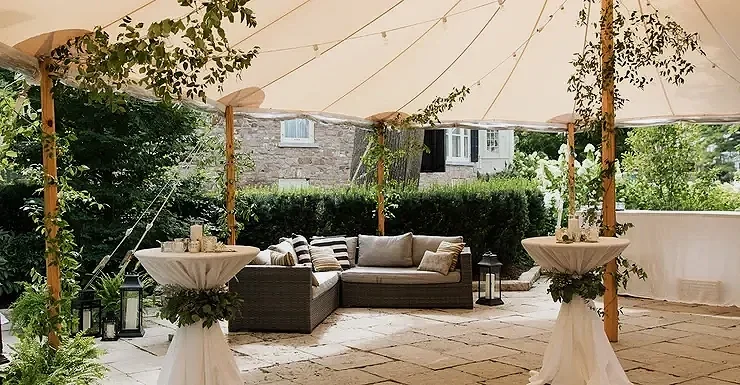
Planning an outdoor wedding in Ontario offers incredible flexibility and natural beauty, but it also comes with logistical considerations that couples need to address early. From tenting and permits to power and weather contingencies, a well-structured plan ensures your day runs smoothly regardless of conditions. With over nine years of experience and more than 50 outdoor weddings planned, the team at Bowtied With Love has seen firsthand how thoughtful preparation can transform even the most unpredictable elements into a seamless and enjoyable celebration.
The Tent: Your Foundation for an Outdoor Wedding
Your tent is one of the most important rentals for an outdoor wedding in Ontario. Start by working with a reputable tent rental company that will conduct a site visit to assess the terrain, spacing, and overall layout. This ensures the structure you choose fits both your guest count and the property itself.
Common tent styles include:
Frame Tent: Freestanding and versatile, these can be installed on grass, gravel, concrete, or patios. Ideal for tighter or irregular spaces since there are no center poles.
Pole Tent: Best suited for grass installations. While often more cost-effective, interior poles will impact your floor plan and seating layout.
Sailcloth Tent: Known for their natural ivory fabric and wooden poles, these tents offer a refined, airy look. They are typically a higher-end option but very popular for weddings in Prince Edward County and similar settings.
Clear Top Tent: A premium option that allows for unobstructed sky views—ideal for evening receptions, though they can increase heat during the day.

Bonus Tips
Keep in mind that tents require additional clearance beyond their stated dimensions due to staking and anchoring. This is a common oversight when selecting a site.
Permits & Site Preparation
Outdoor weddings in Ontario often require coordination with your local municipality. Requirements vary by location, so it’s important to confirm details early in the planning process.
You may need:
A tent permit, depending on size and duration
Utility locates to identify underground wires, water lines, or septic systems
Approval for noise bylaws or extended event hours
Your tent provider or planner can often guide you through this process, but responsibility ultimately falls on the property owner or couple.
Power & Electrical Planning
Access to reliable electricity is one of the most overlooked aspects of outdoor wedding planning. Many venues and private properties do not have sufficient power to support a full event setup.
Vendors that typically require power include:
DJ or live band (often requires a dedicated circuit)
Catering teams (especially for hot food preparation)
Luxury restroom trailers
Tent lighting and ambiance lighting
Heating or air conditioning units
In most cases, renting a whisper generator is the most efficient solution. These are designed for events and operate at a lower noise level. If a generator is required, plan placement carefully—positioning it away from the main tent and using extended cabling will help minimize sound disruption.
Weather & Rain Plan Strategy
Ontario weather is unpredictable, even in peak summer months. A solid rain and weather backup plan is essential—not optional. Sidewalls for your tent are not to be overlooked. Many couples plan for rain but they don't plan for wind which can easily destroy a beautiful tablescape.
Key considerations:
Add tent sidewalls to protect against wind, rain, and temperature drops
Consider heaters for spring/fall weddings or fans/AC units for peak summer
Ensure flooring options (or at minimum, high-traffic coverage) for muddy conditions
Review your venue’s indoor backup plan, if available
Your goal is to make sure the event can continue comfortably without major last-minute adjustments.

Guest Comfort & Flow
A successful outdoor wedding isn’t just about aesthetics—it’s about functionality. Thoughtful layout planning directly impacts your guest experience.
Plan for:
Reasonable walking distances between ceremony, cocktail hour, and reception
Clearly defined and covered access to washrooms
Adequate lighting for pathways and evening transitions
Communication with guests about terrain (grass, gravel, sand) and appropriate footwear
If your event is held in a more remote Ontario location, also consider transportation logistics, especially for evening departures.
Design & Decor
Once the logistics are sorted you can begin planning the design. A wedding tent is a blank canvas, that will provide you with endless possibilists to make your wedding vision come to life. It also means that you will likely need to rent or purchase everything you will need. Ask your planner, decorator, florist, and caterer for assistance in choosing what’s right for your outdoor wedding.
Outdoor weddings in Ontario can be seamless and memorable when logistics are handled correctly. Prioritizing infrastructure—tenting, power, permits, and weather protection—allows you to fully enjoy the setting without unnecessary stress on the day of.
Venues showcased: Spindle Tree Manor & Riva
Captured by: Michael East, Josh Sauer, Luiza Anderle
Planner: Bowtied With Love Weddings & Events
Offering Wedding Planning and Coordination in Kingston, Prince Edward County and Beyond.